
How to Search Civil Dockets
JUSTICE Search is the statewide public entry point for an Arthur County civil docket. Look up a case by party name. Then narrow it with county, case type, year, judge, or attorney. Search by a party name, not a witness name. Arthur County is number 91. Its case numbers carry a C or D court prefix. The rest is the county number, a type code, a two-digit year, and an identifier.
One-time access costs $17. That fee comes with limits. Expect a 24-hour entry lag, a cap of 30 cases per result, and a three-calendar-day result window. Remember that a result list is not the case file. Case details may include a summary and parties. They may also include financial information, the ROA, judge notes, and public images. If an image will not load because the file is older, confidential, or restricted, note the exact entry. Then ask the clerk for the right request path.
- Begin with the party name, then combine Arthur with case type or year if the result set is broad.
- Confirm the C or D prefix, county 91, case type, caption, party roles, and year before opening the record.
- Read the ROA from the complaint or petition through service, motions, orders, settings, and the latest disposition.
- Request a specific plain or certified copy from the clerk when a document, judgment, or authenticated court record is needed.
The Judicial Branch court-records search policy identifies terminal and clerk-request routes.
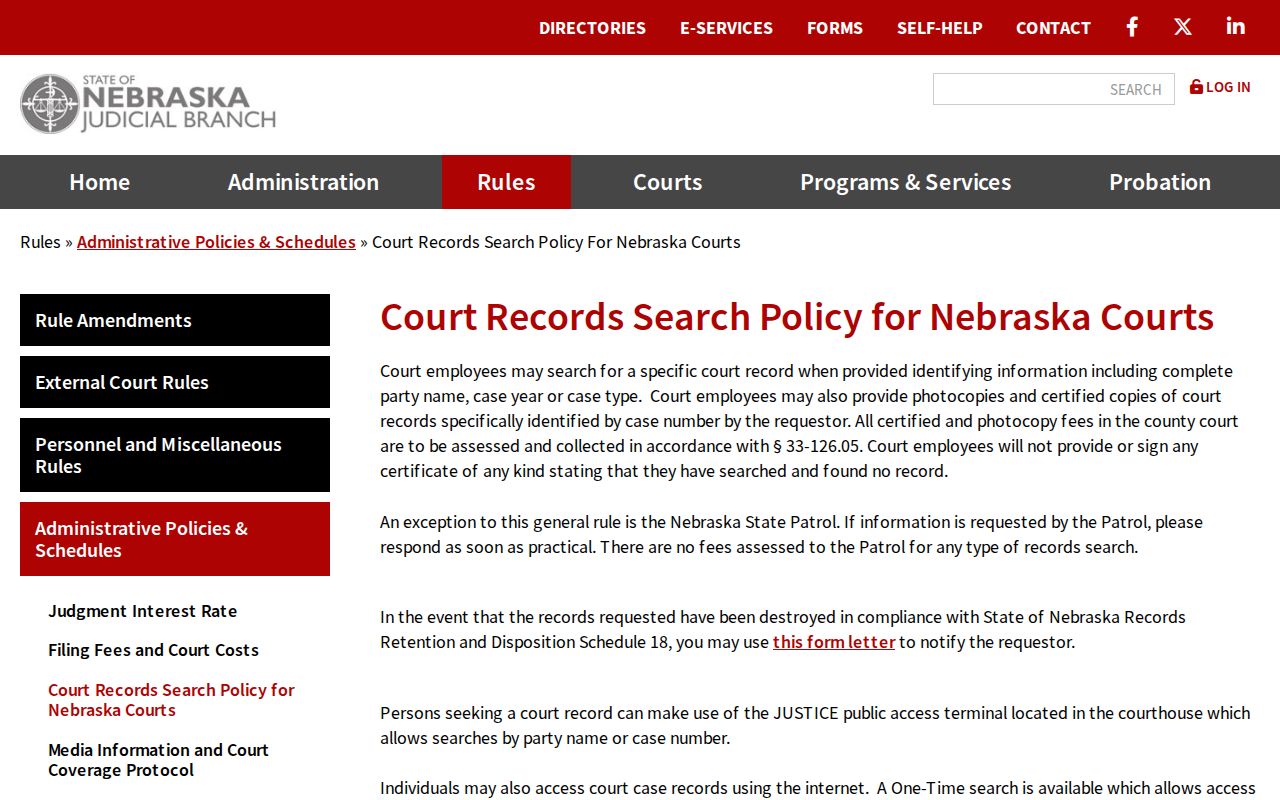
The terminal gives free access to Arthur County civil dockets as a public research channel. For specific copies or a certified record, though, go to the clerk.
Arthur County Civil Docket Search Limits
A blank result screen is not always bad news. It can mean a party name is spelled differently. The case may sit in the other trial court. The 24-hour entry lag may not have caught up, the record may be restricted, or the file may be an older paper one. One-time JUSTICE searches also stop at 30 results. So narrow your Arthur County civil docket search by year, type, judge, or attorney. A broad name search alone is never proof the docket is complete.
Arthur County Civil Dockets C91/D91
Civil matters in Arthur County can land in two different trial courts. County court holds concurrent original civil jurisdiction up to its current limit and also takes small claims, probate, guardianship, conservatorship, and adoption, each under its own rules. Arthur District Court carries general original and appellate jurisdiction. A county-court civil appeal can spawn a later district docket. So the original C 91 number by itself may not tell the whole procedural story.
| Arthur court | Civil docket matters | Number and clerk path |
|---|---|---|
| County Court | County-court civil claims, small claims, probate, guardianship, conservatorship, adoption | C 91 CI, SC, or PR; Yuri Cole |
| District Court | General district civil cases and county-court appeals | D 91 CI; Becky Swanson |
| Appellate system | Further appellate activity where applicable | Confirm the originating court and appeal route |
What a Civil Docket Shows
An Arthur County civil ROA lists court activity in the order it happened. The header tells you the case and the court. The party block shows who filed and who must respond. Filing and service entries may include a complaint or petition, summons, return, waiver, answer, counterclaim, or amended pleading. Read the event history in order. That habit keeps a filing date from being mistaken for service, a motion for an order, or a judgment for a later satisfaction.
| Header | Case number, court, status, filing date, judge, caption, and civil or related case type. |
|---|---|
| Parties | Plaintiff or petitioner, defendant or respondent, additional parties, and attorneys of record when entered. |
| Filing and service | Complaint or petition, summons, return, waiver, answer, counterclaim, and amended pleading entries. |
| Motions and settings | Motion title, response, hearing, scheduling order, notice of setting, signed order, and reset history. |
| Disposition | Dismissal, nonsuit, default, agreed judgment, trial judgment, settlement, or another court-entered result. |
| Post-judgment activity | Abstract, execution, writ, garnishment, payment, satisfaction, appeal, reopening, or amendment when applicable. |
Arthur County Civil Limits and Small Claims
County court's civil ceiling is $70,000. That figure runs from July 1, 2025 through June 30, 2030. It comes from the current statewide rule. Small claims now cover $7,500 or less after the 2025 statewide change. These amounts explain why an Arthur County civil filing might start in county court. But size is not the only test. Subject matter, statutory jurisdiction, and the case category still control.
Arthur County civil routing: Probate and guardianship can belong in county court regardless of the ordinary civil amount. A small claim is a case type, not a separate Arthur courthouse. Confirm the displayed court and case type instead of deciding from the amount alone.
The 2025 jurisdiction-limit announcement supplies the statewide source for both limits.
Arthur County Civil Docket Type Codes
The case number itself is a handy first check. In the official statewide pattern, CI means civil. SC means small claims, and PR means probate. The C or D prefix shows which Arthur County trial court holds the matter. Keep the whole number intact. The displayed case type and court are often more reliable than a loose description. That description covers only the case amount or subject.
Types of Civil Cases on the Docket
Read Arthur County civil docket labels alongside the actual case type. Check the full entry text too. CI can cover contract, debt, property, injury, or another civil claim within jurisdiction. SC marks a small claim. PR marks probate. Guardianship, conservatorship, adoption, and juvenile-related files may carry access rules that differ from ordinary civil litigation. District civil activity can involve a claim above the county-court limit. It can also involve subject matter assigned to district court, or an appeal or transfer under a different number.
- Contract, debt, property, injury, and other CI civil claims
- Small claims, shown as SC when that type is used
- Probate and related PR matters
- Guardianship, conservatorship, and adoption matters in their county-court routes
- District civil cases and county-court appeals under D 91
The official Nebraska forms index lets you filter by title, form number, type, language, category, and form set. It is a good way to find statewide forms. Still, it is no substitute for the docket or a clerk's instruction in an Arthur County civil matter.
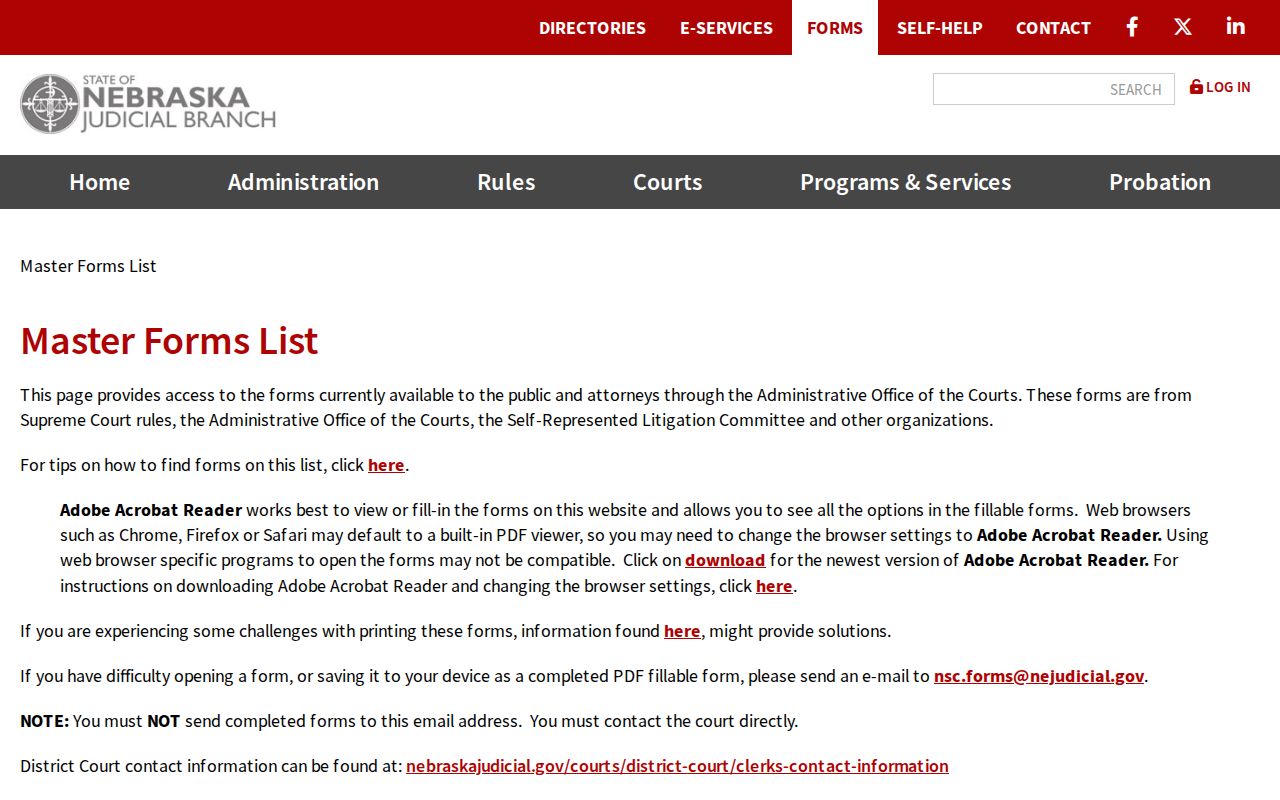
Arthur County courts run on standard form numbers, and those numbers can show up inside a civil ROA entry on the docket.
Arthur County Civil Filing Context
The FY2025 reports show a split worth knowing. Arthur County Court recorded one adult civil filing for the year ending June 30, 2025. Arthur District Court recorded four adult civil filings in that same fiscal year. Keep the two totals separate. They are court-level counts. Do not merge them into one Arthur civil docket figure. Neither number counts the older public files that may still exist.
For a current case, rely on the ROA and clerk confirmation, not a yearly filing count.
Settings and Hearings on Civil Dockets
A civil setting can take many forms. It might be a scheduling conference, motion hearing, default hearing, bench trial, jury trial, or post-judgment hearing. The event title tells you what kind of proceeding it is. The date that matters is the latest entry that isn't cancelled. A notice of setting or a scheduling order can shift a date. So an older setting may be stale. A motion hearing on the docket only means the court plans to hear a request. It does not mean the request was granted. For the order of settings, follow the case's ROA. The statewide county calendar can help. Arthur District Court is left out of its district-court results. For a D 91 CI matter, use the district ROA and Becky Swanson's office.
Arthur County Civil Docket Date Check
A signed order beats a stale calendar row every time. That is the rule of thumb for checking a civil hearing date in Arthur County. Arthur District Court itself does not show up in the statewide district-calendar results. A county-court search there can help but carries a warning that late entries may dent its accuracy. Start with the newest ROA setting. If a deadline or travel hinges on the date, call the court. Confirm it directly before you rely on it.
Arthur County Civil ROA: Service, Motion, Order
Think of a civil docket entry as one link in a chain. The complaint or petition starts the case by establishing the filing. Notice comes later, through a summons, a return, a waiver, or an appearance. A counterclaim or an amended pleading can shift the issues. The first caption stays the same. From there, trace the motion, any response or objection, the hearing, the signed order, and any judgment or later disposition. Read the whole entry, too. Arthur's clerk publishes no abbreviation list, so short forms carry no official key.
- Service
- The record of notice or appearance; filing a complaint does not prove service was completed.
- Motion
- A request for court action. The later order, not the motion alone, records the ruling.
- Default judgment
- A judgment entered in the circumstances reflected by the court record; read the order and later entries.
- Satisfaction or release
- A later post-judgment entry that may show payment or release after a judgment.
Public Access to Civil Dockets
Civil ROA information is public through JUSTICE, authorized access routes, and courthouse terminals, within limits. Nebraska's public-record rules let anyone examine records and get copies during ordinary office hours. A civil file can still redact or restrict birth dates, gender, Social Security numbers, financial-account numbers, sealed material, adoption information, juvenile records, or other confidential content. The docket entry itself may be visible. That visibility never promises a public image of the document behind it.
Key civil record rules:
Neb. Rev. Stat. §84-712 provides the public-record examination and copy route, subject to exceptions and fees.
Nebraska Judicial Branch §2-215 provides for public inspection of electronic filings unless law, rule, or order restricts access.
Nebraska Judicial Branch §6-1464 protects specified personal and financial information in civil court records.
A civil result open to the public can still lack an image. When that happens, a specific request to the clerk may be needed. The court's DC 1:12 sealed-record request information sets out the state route for a person seeking a copy of that person's own sealed record.
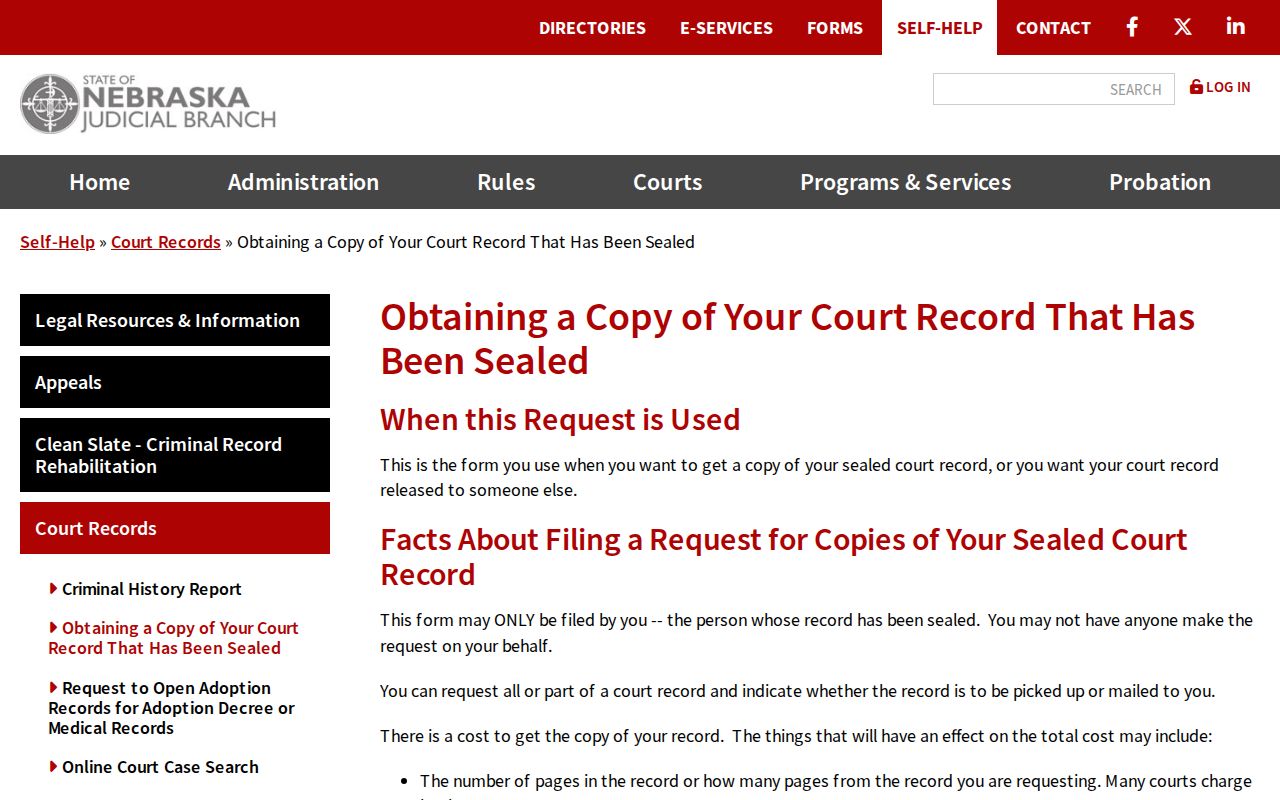
For a plain public copy, know the Arthur court, the case number, the document, and whether you need plain or certified status.
Arthur County Civil Docket Restricted Fields
Even a public Arthur County civil docket holds back more than you might expect. Document images may be missing, and protected details get redacted. In civil court records, that protection covers birth dates and gender. It also covers Social Security numbers and financial-account numbers.
Adoption, juvenile, and sealed files play by different access rules too. Any other legally restricted material does as well. A neutral ROA trace proves nothing about release. It never authorizes anyone to see the hidden document.
Arthur County Civil Images and Clerk Requests
For civil records in person, the Arthur County Court Clerk is Yuri Cole, listed c/o Keith County Court, 511 N. Spruce St., Room 105, Ogallala, NE 69153, phone 308-284-3693. The published Arthur County window runs the second Wednesday of the month, 1:00 to 3:00 P.M. Becky Swanson, Clerk of the Arthur District Court, sits at P.O. Box 126, Arthur, NE 69121, 308-764-2203.
Call ahead before you drive. Confirm where the file is kept, and ask whether your request is a county or a district case.
Copy fees at the county court are modest. Plain photocopies are listed at 25 cents per page. A certificate with seal runs $1, and an authenticated certificate with three seals runs $3. District charges differ, so confirm them with Becky Swanson. Older Arthur County civil or probate files may live on paper, microfilm, or in an archive.