
How to Get Arthur County Court Records
Know the court before anything else. Becky Swanson holds the Arthur District Court records, which carry the D 91 pattern. Yuri Cole's county-court office holds Arthur County Court records under C 91. For a public image or register of actions, try JUSTICE Search. Open the case only after you confirm the result is the correct one. The online search covers public electronic information well enough for most lookups. It will not produce every image, though. It also never issues a certified copy on its own, whatever the screen shows.
Arthur County also offers a free terminal at the courthouse. It stays available during ordinary office hours under the electronic-record rules. Before driving over, call the correct clerk. That matters most for county-court requests. The official listing routes them c/o Keith County Court in Ogallala. You can request records by phone, in person, mail, or fax. Becky Swanson's published email works as a district-court contact. Yuri Cole's office lists no separate records email. For older material, ask whether a paper file, microfilm, or the State Archives collection fits better.
- Decide whether the needed Arthur County item is an ROA view, public image, plain copy, certified copy, audio, or transcript.
- Identify the C or D court, county 91, type, year, identifier, and the document title or entry date when possible.
- Use JUSTICE or the courthouse terminal to locate the public record and record the exact ROA entry.
- Call the proper Arthur County clerk about unavailable, older, or certified material, then confirm payment and delivery instructions.
- Send a precise request by the channel the clerk confirms. State plain or certified, pickup or mail, and the requested date range.
- Ask for the governing rule or statute if access is denied, rather than broadening a request for protected material.
The Nebraska Judicial Branch fee schedule publishes the current statewide copy and certification amounts.
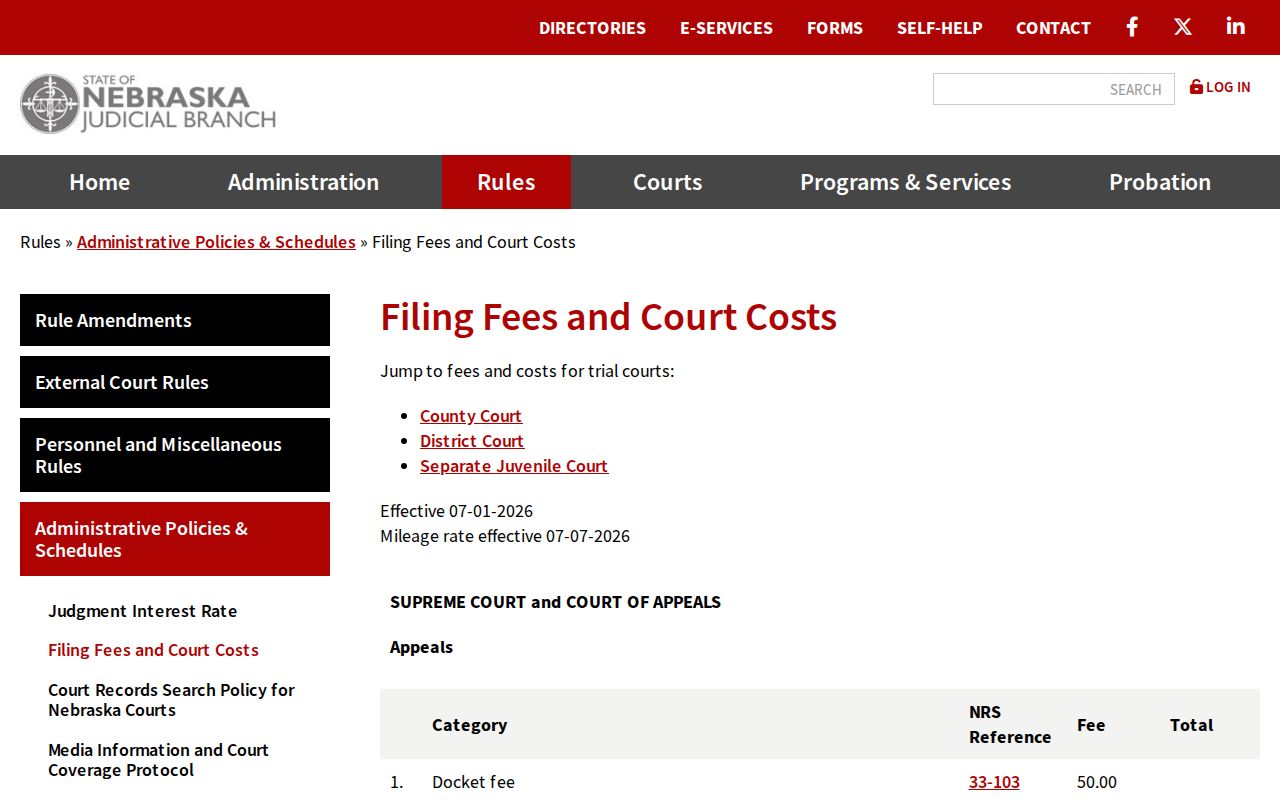
The schedule lists the county-court amounts. Confirm Arthur District Court copy and certification charges with its clerk directly.
Arthur County ROA and Filed Documents
Three products serve different needs. The register of actions, or ROA, is the chronological index. It shows that a complaint, hearing, order, or judgment was entered. A filed document is the real item behind the entry. Think of a pleading, motion, signed order, judgment, exhibit, or similar paper. A certified copy is different still. The clerk authenticates it with a certificate and seal. A downloaded image never becomes certified just because it appeared online.
Make the request narrow by using the entry date and title. Asking for "the whole file" can pull in pages that are unavailable, oversized, archived, or restricted. Each piece, from an initiating petition to a summons return, motion, order, judgment, abstract, writ, or satisfaction, sits in its own place in the case history. The clerk can explain the copy route. That happens without drafting a new transcript or touching a sealed file.
- ROA
- The dated Arthur County case-history index for filings, settings, orders, and outcomes.
- Filed image
- A public electronic copy when the document is available and not confidential.
- Plain copy
- A research copy without a clerk certificate or seal.
- Certified copy
- A clerk-authenticated copy for a purpose that requires certification.
Types of Arthur County Court Records
One Arthur County court file can hold both public and restricted material. The category you request matters. Case court, custodian, and release rule may all shift. County court keeps traffic, misdemeanor, probate, small-claims, and county-court civil items. District court holds district civil matters, felony trial-level cases, district judgments, and related filings. Remember that the online record may run thinner. It may hold less than the clerk's paper or archived file.
- Register of actions or docket reports that list dated case activity.
- Complaints, petitions, answers, motions, orders, and judgments when public and available.
- Traffic citations, plea or waiver materials, settings, dispositions, and costs in a C 91 TR matter.
- Probate, guardianship, civil, small-claims, and district-court case records subject to their access rules.
- County-court digital audio or a typed transcript, each requested through a separate process.
Note: A category listed in an ROA does not establish that its image is public, scanned, or available for online download. Ask the clerk about that item first.
Arthur County Court Record Images
JUSTICE can display nonconfidential electronic images. That applies especially to documents filed or uploaded after April 16, 2008. Availability still varies case by case. A public docket entry may show no linked image at all. The document could be older, never scanned, held elsewhere, or confidential. Open the ROA first. Note the title and date. If the link is missing, ask the clerk for that exact item.
The current Judicial Branch eServices explanation says most filed documents appear as images or clickable links. That is a general description. It is not a promise of an Arthur County image in every historical or restricted case. The paid detail route and a subscriber detail route can also carry different transaction terms. Check the screen before you open an image.
What an Arthur County Court Record Contains
An Arthur County record opens with the case header. The header names the court, county code, type, year, parties, judge, and caption. Below it sits the ROA. That index supplies the chronological trail of the case. The file itself can add pleadings, returns, orders, judgments, exhibits, and financial or setting information, whenever those parts are public and available.
| Case number | The C or D prefix, Arthur County 91, case type, year, and identifier, such as C 91 TR 25 0001234. |
|---|---|
| Pleadings | Initiating complaints or petitions and later requests by parties, if public. |
| ROA | The dated docket index for filings, hearings, settings, orders, and dispositions. |
| Orders and judgments | Signed court rulings and final resolutions, which may need clerk certification. |
| Exhibits or recordings | Items that can be separately held, restricted, or requested through audio and transcript channels. |
Treat any result as a starting point. When you request a copy from Arthur County, give the exact court and record category.
Arthur County District Court Records
Becky Swanson is Clerk of the Arthur District Court. She handles D 91 district dockets, filings, judgments, and district-certified copies. Her published contact is P.O. Box 126, Arthur, NE 69121; 308-764-2203; fax 308-764-2216; and becky.swanson@nejudicial.gov. Before mailing or faxing a request, be specific. State the district court, case number, document title, and date. Say whether you need a plain or certified copy too.
For an older Arthur District Court record, this clerk is the practical local contact. The file may sit at the courthouse. It may sit in archival storage or under a special copy process. Do not assume the county-court copy fee equals the district rate. Ask instead for the current cost. Also ask about prepayment terms, delivery options, and any certification charge. A short call saves a rejected request.
Certified Copies and Fees
Arthur County offers three flavors of a county-court copy. The plain one is a research copy. Certification adds the clerk's certificate and seal. A step above that, authentication carries three seals. The current state schedule sets no special Arthur certified-docket-sheet price, so the published starting point is the county-court copy pages plus the certificate and seal charge, unless the clerk quotes an authorized local amount.
| Item | Published amount | Arthur County note |
|---|---|---|
| County-court plain copy | $0.25 per page | Set by Neb. Rev. Stat. §33-126.05 and the current fee schedule. |
| County-court certificate and seal | $1.00 | Added when a certificate and seal are required. |
| Authenticated certificate, three seals | $3.00 | Ask whether this higher authentication is necessary before ordering. |
| District-court copy or certification | Confirm with clerk | Becky Swanson provides the applicable Arthur District Court amount. |
| JUSTICE one-time search | $17 currently | Search charge, not a certified-copy charge; read the live screen. |
Arthur County Court Record Requests
Yuri Cole serves as the Arthur County Court clerk. The official court listing places the office c/o Keith County Court in Ogallala. The address is 511 N. Spruce St., Room 105. That is in Ogallala, NE 69153. The phone is 308-284-3693 and the fax is 308-284-6825.
It also shows an Arthur County Court office window. The window runs on the second Wednesday of each month from 1 to 3 P.M. Call ahead, since that listing does not promise a daily Arthur counter. A strong request should be specific. Name the court, the C 91 number, the case type and year, and a party name. Add the exact document or ROA date, plain versus certified, and pickup or mail. Ask whether payment goes in first. Ask too whether an envelope, deposit, or other delivery details are required. The public sources publish no Arthur-specific deadline, deposit, or ordinary-copy identification rule.
Arthur County Court Clerk
c/o Keith County Court
511 N. Spruce St., Room 105
Ogallala, NE 69153
308-284-3693
Arthur County Historical Court Records
Older Arthur County records may predate the public image era. Search the specific case first. Then ask the clerk about paper files, bound volumes, or microfilm. The Nebraska State Archives inventory covers Arthur County materials from 1914 through 1993, including a county-court delayed-birth-registration docket along with other local government records. A collection description is only a description. It does not guarantee every item is open, complete, or online. Keep the request focused. Name the court, record type, date range, party or case number, and the exact document. The right sequence starts with a public case search. Next comes terminal inspection. Then a clerk copy request, an archival inquiry, and finally a written records request if needed. That order keeps an Arthur County historic-record search with whichever office can actually produce it.
Arthur County Audio and Transcripts
Audio and typed transcripts are not ordinary docket downloads. For a county-court proceeding, the statewide digital-audio form asks for county, court, case number, proceeding or date, delivery, payment, and certification choices. A restricted hearing may not be available. Typed transcripts run through the separate court-reporter request process, where the reporter or clerk should quote availability, cost, and delivery. The clerk cannot recreate a transcript, and neither can the ROA. Pin the request to a hearing date. Add the hearing type and the C or D case number. That way nobody mistakes it for a broad Arthur County docket search.
Arthur County Records and Federal Files
Arthur County district and county court records are Nebraska state trial-court records. A federal case lives in a different system. A different court custodian holds it. PACER is no substitute for a D 91 or C 91 request. Any Arthur County state-court document request stays with the clerk. Use the JUSTICE route described above. The PACER account and case-search service is the federal public-access system, not an Arthur County court-records portal.
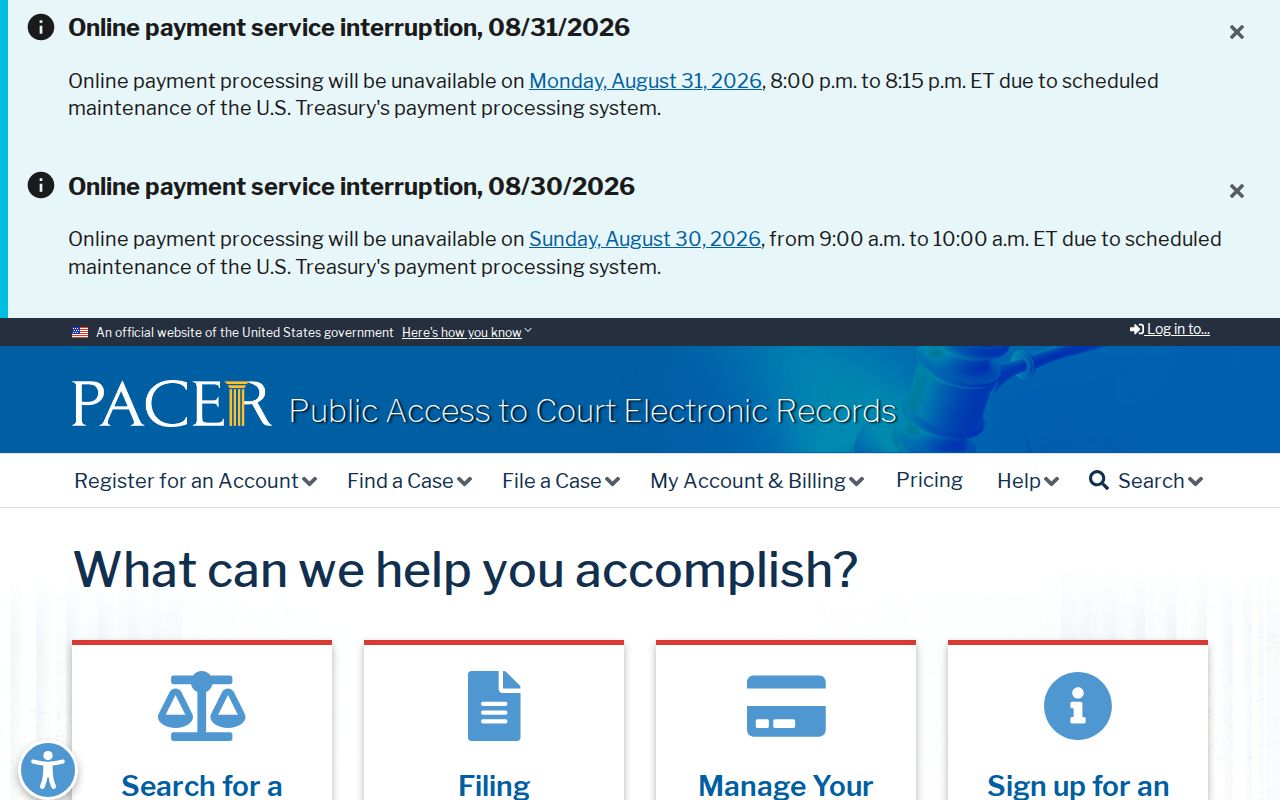
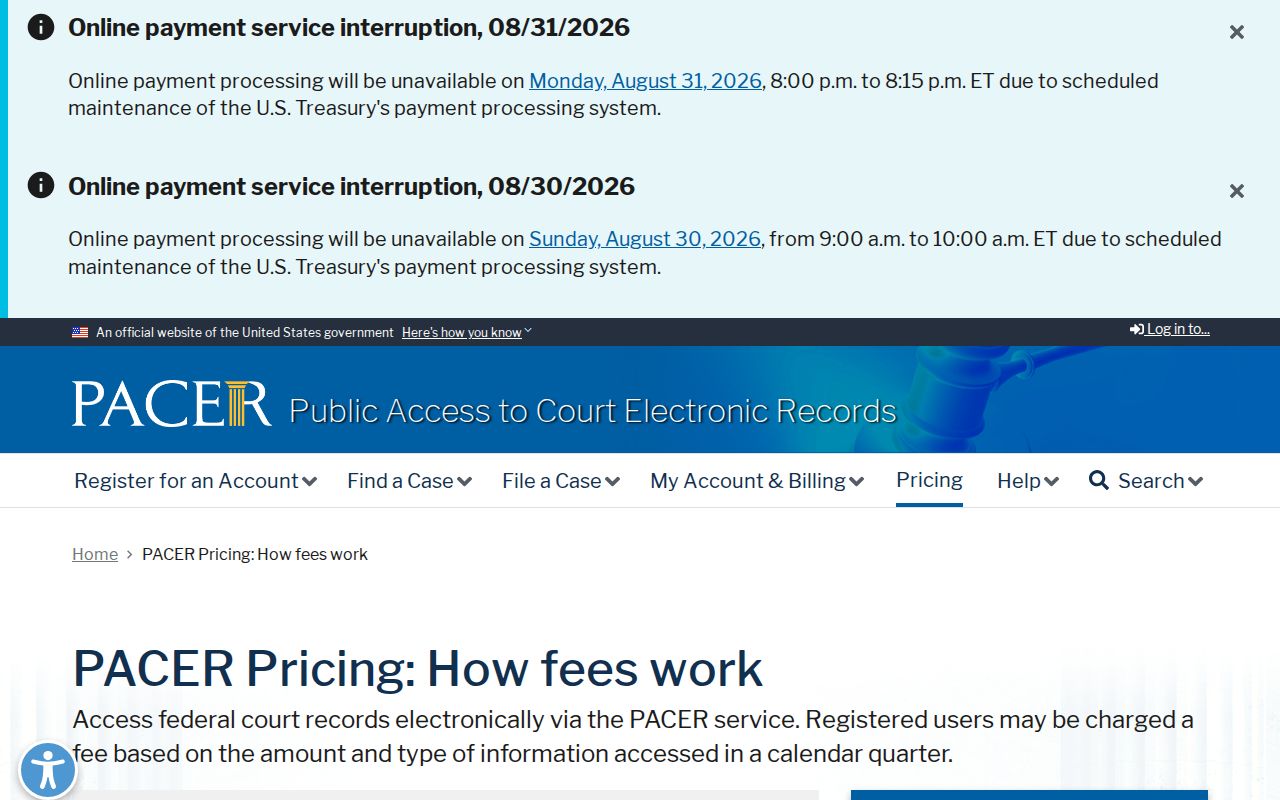
That federal interface exists for federal files. An Arthur County court record belongs with its Nebraska trial-court custodian. The PACER fees page describes federal access charges that do not apply to Arthur County court copy fees.
For the actual Arthur County copy request, rely on the county-court fee table or the district clerk's quote. The CourtListener image depicts a separate federal public-research interface. It does not replace an Arthur County court record, docket, or clerk copy.
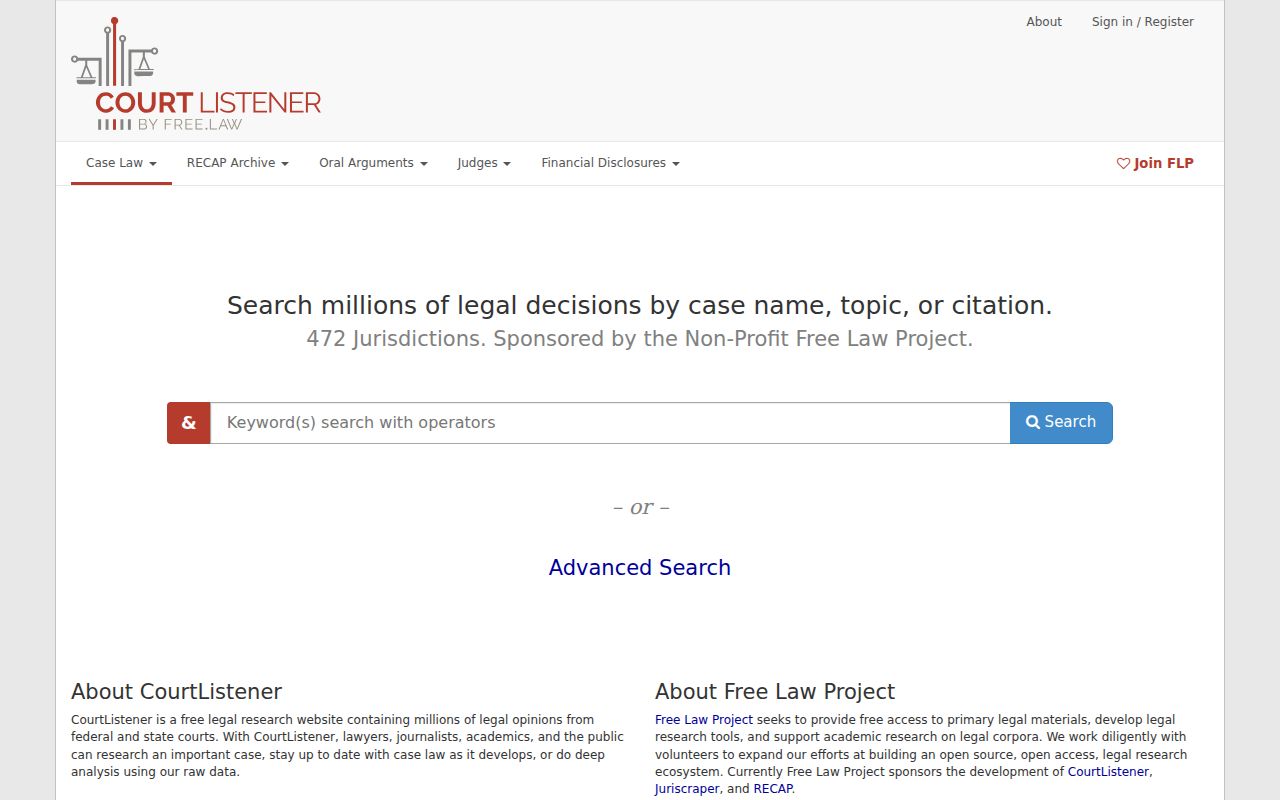
For Arthur County state-court material, stick with JUSTICE, a terminal, or the correct clerk. A federal research interface will not fill the gap.
Arthur County Bankruptcy Record Path
Bankruptcy never lands on an Arthur County court docket. It belongs to the federal system, so the Nebraska Judicial Branch points people to the bankruptcy courts in Lincoln and Omaha instead. Those federal channels handle everything. An Arthur County case number, a traffic ticket, a probate filing, or a district judgment has nothing to do with it. The Nebraska Bankruptcy Court location page lists the federal court locations that sit apart from any Arthur County records office.
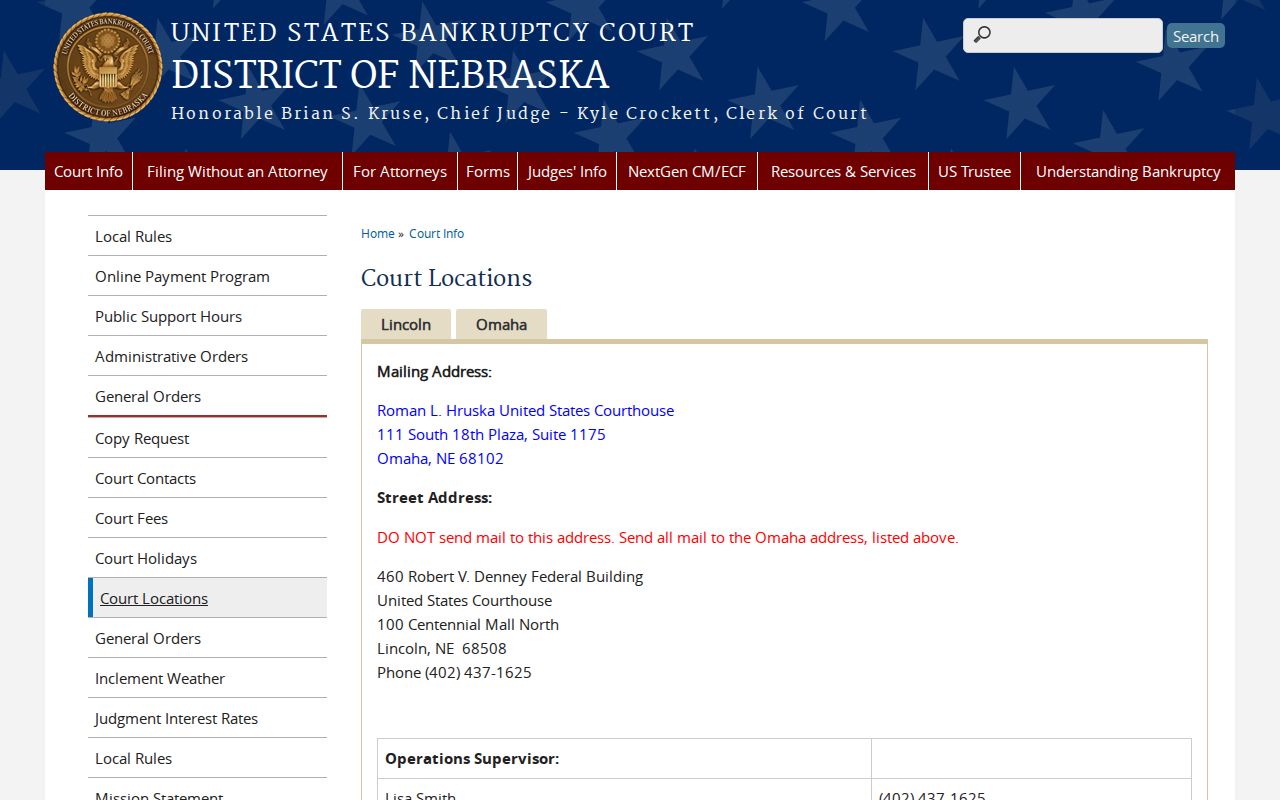
Bankruptcy files live with a federal court, so the docket you want is not held by the Arthur County clerk at all. It sits in a separate federal system with its own case numbers and rules.
For phone help and PACER access, the Bankruptcy Court telephone and PACER information from the federal court explains how to reach that office and use its electronic records.
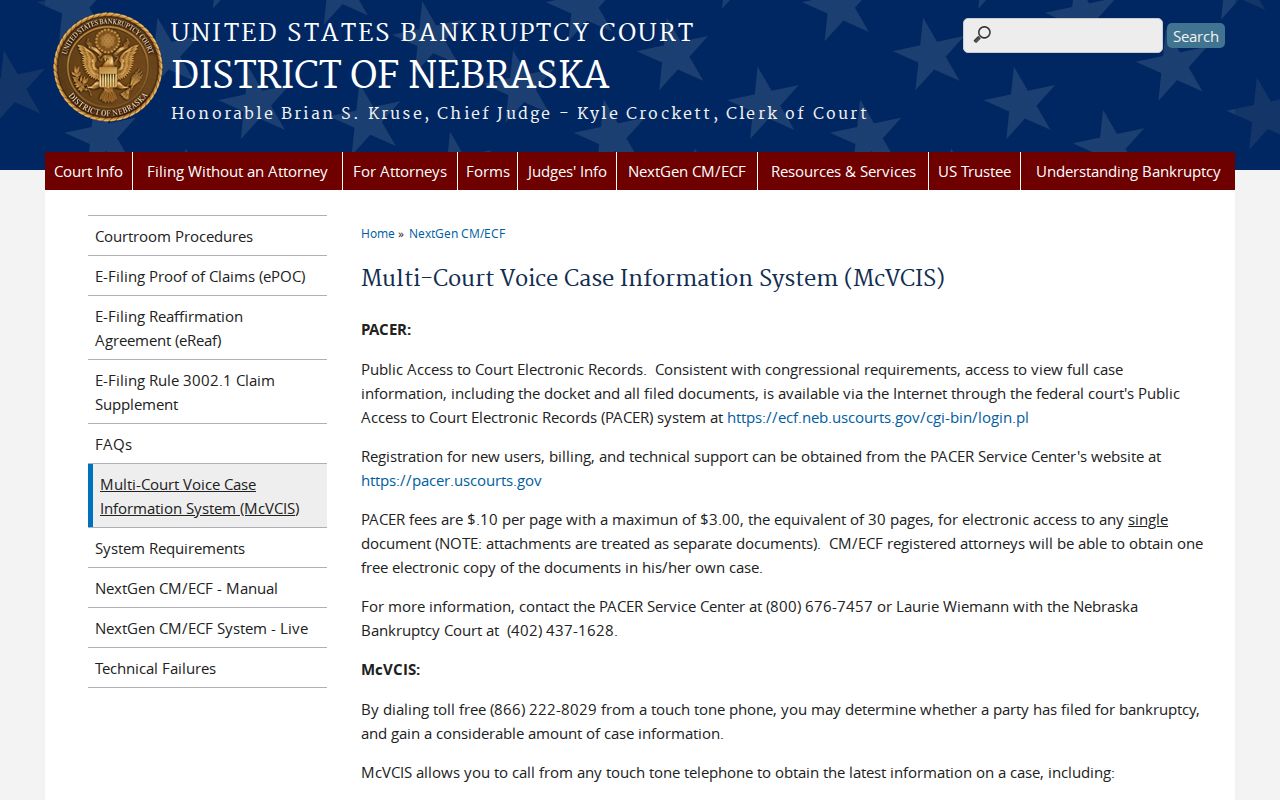
An Arthur County case number that starts with C or D belongs with your local court request. Save the federal case number for the federal court alone.
Public Access and Sealed Records
Nebraska opens its court records only so far. Law, court rule, and court order set the limit. A public terminal has limits. So does a JUSTICE search. It stops short of juvenile cases, sealed adult files, adoptions, presentence reports, protected child-welfare matters, and other confidential material. The same shield covers sensitive fields inside civil files. These include birth dates, Social Security numbers, and financial account numbers. One quirk is worth knowing. A ROA entry can stay visible even after its linked image is restricted.
Anyone may examine and copy a public Arthur County record during normal office hours, paying the lawful fees. Put your request in writing. Name the court, the case number, the filing year or case type, and the exact documents you want. If the clerk turns you down, ask which statute supports the denial. A sealed file is a different matter. Do not chase one through an ordinary public-record request as though it were open to everyone.
Access rules: Neb. Rev. Stat. §84-712 permits examination and copies of public records during ordinary hours, subject to exceptions and fees. Article 8 governs public access to electronic court information and courthouse terminals. Rule §2-215 makes electronic filings public unless restricted by law, rule, or order. Section 84-712.03 provides review and mandamus remedies after a qualifying records denial.